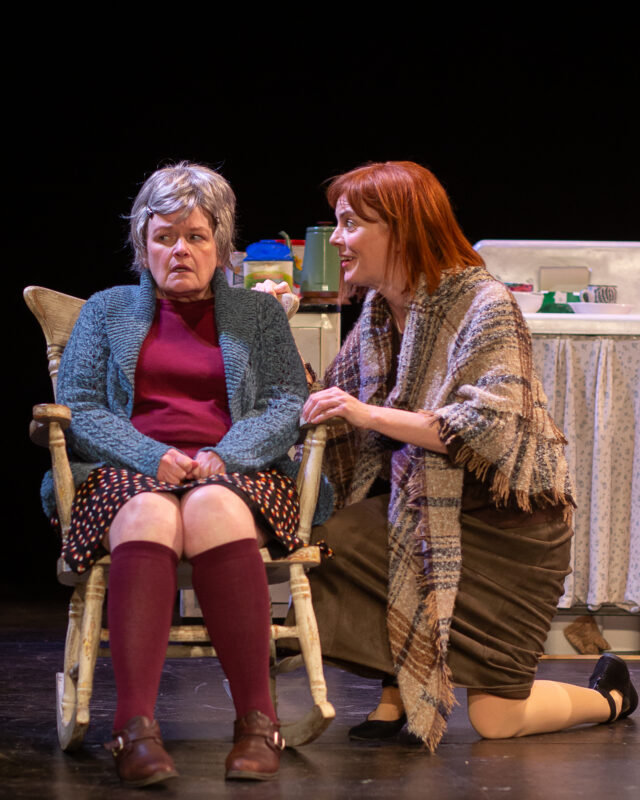

Picture yourself in a comfy little pub in Ireland’s rural County Leitrim in the 1990s. It’s a dark, rainy night, and a few of the locals are on hand for a comforting pint or two. The owner of the pub, Brendan, holds court behind the bar. There’s Jack, the local garage owner and mechanic, along with Jim, Jack’s assistant. Finbar, a businessman, is visiting. Lastly, there’s Valerie, the stranger, a blow-in from Dublin who’s renting an old house nearby.
Settle in for a night of stories. Ghost stories. Stories of the supernatural. Ireland is the land of banshees, leprechauns and fairies, after all.
Ah, but if only things were as simple as ghost stories are in the telling.
This is the setting for Conor McPherson’s highly acclaimed “The Weir,” to presented by Philadelphia’s own award-winning Irish Heritage Theatre March 13-19 at Plays and Players. And it’s been a long time coming.
“We’ve had it on our list for many, many years and actually not gotten to it,” says Peggy Meecham, the play’s director, “and so, it’s an interesting experience to finally do it. It’s been produced so frequently by so many companies. It’s very strange to be an Irish theatre company that hasn’t done it yet.”
Better late than never. And yet, Meecham says, it couldn’t be timelier.
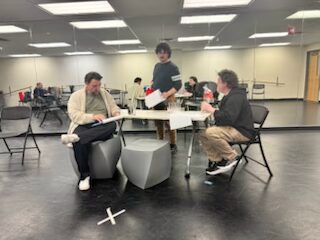
“I am struck that we are doing it right now because I think the underlying message, which is so significant right now, is connectedness,” she says. “And so, we assume that in an Irish pub, where everyone goes regularly and it’s their local, and this is part of the culture, that people have this deep level of connectedness. And yet, a stranger shows up and the characters realize that there’s much more still to be learned about one another and the world itself.”
The storytelling starts innocently enough, as a way to just have a bit of “craic” – to entertain each other. The first ghost story, Meecham explains, is not all that revelatory. But as the evening goes on, the stories become ever more intimate. “And then Valerie tells her story, which is deeply personal,” she says. “It just gets deeper and deeper beyond what the characters could have imagined as their tales progress. By the end of the evening, they’re asking deeply prying personal questions. You begin to see a kind of progression in their own interest in each other. It could be a kind of superficial cultural exchange on one level, but this ends up not being that.”
Rather, the first tale sets the tone for the evening – an innocent seeming tale of the supernatural that manages to trigger a series of ideas that open a deeper connection for all of the characters.
For example, Finbar the businessman is the only member of the party who has left the town and returned. Of course, an underlying theme of Irish life is immigration. Who stays? Who is forced to stay behind?
“There are tensions around these stories, and there are hints of resentment and jealousy,” Meecham says. “People have to make choices that are really complicated. Someone gets to leave and send money back, but someone else has to stay and take care of the family.”
It’s Valerie who truly unlocks the door to the evening’s surprise, and perhaps shocking, disclosures. McPherson doesn’t really develop her character at first, says Meecham. And then she shares her traumatic tale, and suddenly we feel as if we know everything about her. She is the linchpin.
“That’s a very powerful playwriting technique that McPherson used,” says Meecham. “I think her character functions as the outsider who illuminates something for the villagers themselves that they would not have discovered otherwise. When we know a lot of things, we never ask the question: what can I not see? The characters think they know each other and would say that they’re very close. I don’t think they look at one another and say, what do I not see in your life, in your story? Valerie’s presence allows that question to emerge. You can look at someone and they seem friendly. You’re charmed by them without recognizing that they’re in tremendous pain and suffering from something that’s happened to them.”
McPherson manages to execute these traumatic unveilings lightly, in a way that is anything but heavy-handed, and it’s a neat trick.
As Meecham says: “It think he’s given us a portrait of life in rural Ireland at the time. It’s as well done as it could be done. He has really tapped into the essence of a particular Irish sensibility or cultural relationships that are very strongly communicated, and we ourselves feel the whole dynamic of the place. Each of the characters represent different dimensions of that life. And that’s the gift of the play.”
Plays and Players is at 1714 Delancey St. in Center City Philadelphia. Featuring: Aidan McDonald, Oliver Donahue, Brian Rock, Robert Hargraves, and Kirsten Quinn.
Show dates are as follows:
Friday, March 13 (Preview) at 7 p.m.
Saturday, March 14 (Audience Preview) at 2 p.m.
Saturday, March 14 (Opening) at 7 p.m.
Sunday, March 15 (Performance) at 2 p.m.
Thursday, March 19 (Performance) at 7 p.m.
Friday, March 20 (Performance) at 7 p.m.
Saturday, March 21 (Performance) at 7 p.m.
Sunday, March 22 (Performance) at 2 p.m.
Thursday, March 26 (Performance) at 7 p.m.
Friday, March 27 (Performance) at 7 p.m.
Saturday, March 28 (Performance) at 7 p.m.
Sunday, March 29 (Closing) at 2 p.m.
Tickets are $15 (Previews, Students, and Theatre Industry); $20 (Seniors); and $25 (General Admission).
For tickets and more information, go to www.irishheritagetheatre.org and click on “Buy tickets.”